Wellness & Beauty PR
Facial EMS Is No Longer a Fringe Therapy: The Data Says It Has Become a Global Shift
There is a portable device sitting on bathroom shelves in Seoul, Tokyo, Los Angeles, and London, pretty much any metro around the world, honestly. It looks unremarkable – a forked wand, a flat paddle, sometimes an attached glove.
But when pressed against skin, it delivers precisely calibrated electrical pulses that contract the underlying musculature in ways no serum, massage, or facial yoga ever could. It is called an EMS facial device. And while the technology behind this mini wonder draws from clinical neuromuscular protocols that have existed in physiotherapy wards since the mid-20th century, what is happening to it right now – commercially, scientifically, and culturally, is something else entirely.
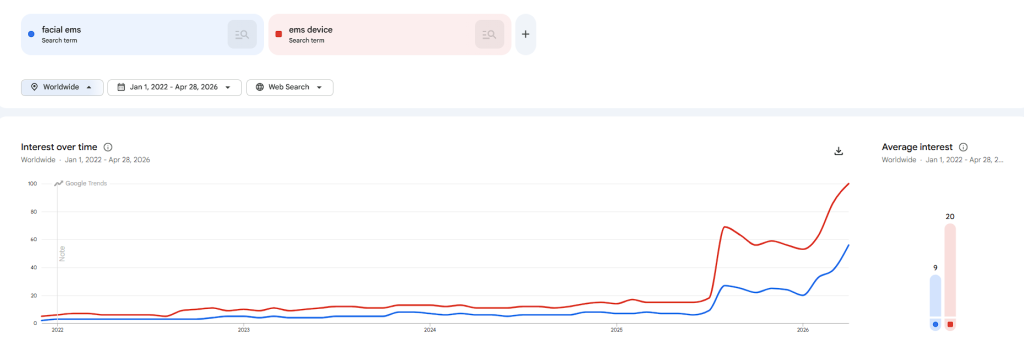
‘Facial EMS’ and ‘EMS Device’ registered a nearly 900% surge in global search interest between late 2022 and early 2026, according to Google Trends, making them one of the fastest-growing search terms in the beauty tech space. The consumer awareness moment has finally arrived, and the data makes that impossible to argue with.
The global EMS facial device market is barreling toward a $3.8 billion valuation, expanding at a compound annual growth rate (CAGR) of approximately 13.5%. That trajectory is not a short-term impulse-driven bubble. It is the culmination of clinical science, virtual trendsetting, a keenness for facial aesthetics, and a $14.4 billion home-use beauty device industry that has fundamentally restructured how consumers relate to their own faces.
EMS and the Face: The Physiology Behind the Pulse
Muscle Atrophy Is a Central Driver of Facial Aging
The popular cultural narrative around facial aging tends to collapse everything into skin: fine lines, loss of collagen, surface-level dehydration. But modern dermatological science has grown significantly more precise.
Age-related sarcopenia – the progressive loss of skeletal muscle mass- does not spare the 43 muscles of the face. Volume depletion in the temporal, masseter, and orbicularis oculi muscle groups contributes substantially to the hollow, sagging, diminished appearance; basically, the oldie look that any beauty-conscious patient and consumer dread. The architecture beneath the skin matters as much as the skin itself, and this is where EMS enters the conversation with ample clinical credibility to back it up.
How Facial EMS works
Facial neuromuscular electrical stimulation (fNMES) works by delivering low-to-medium frequency electrical current through the skin’s surface, bypassing the voluntary motor cortex and directly triggering muscle fiber contractions. At frequencies typically ranging between 40 and 190 kHz in modern consumer-grade devices, the stimulation engages both fast-twitch and slow-twitch muscle fibers simultaneously – a feat that conventional facial exercise cannot accomplish with any comparable efficiency or precision.
The mechanism is not novel: neuromuscular electrical stimulation has always shown promise in improving facial appearance, reducing facial sagging, and wrinkles. What is genuinely new is the density of recent trial data confirming meaningful structural outcomes in cosmetic contexts.
Clinical Trials Show Structural, Not Just Superficial, Outcomes
The research case for facial EMS has sharpened considerably in recent years. A landmark prospective, split-face controlled trial conducted at Tokyo University Hospital – using a device equipped with CERTEC (Cell Energy Regeneration Technology) operating between 40 and 190 kHz, produced results that the aesthetics industry cannot responsibly ignore. The 3D CT imaging methodology deployed in this trial permitted direct measurement of muscle tissue change, confirming statistically significant structural thickness increases in the orbicularis oculi and temporal muscle zones — the areas most implicated in periorbital hollowing and temporal concavity associated with aging.
Beyond muscle mass, the data on geometric change are particularly striking for a non-invasive modality. A prospective study involving 24 weeks of HIFES and synchronized RF treatment found that zygomaticus major muscle thickness increased from 2.06 mm to 2.80 mm, accompanied by a 39.3% rise in EMG signal strength — indicating genuine functional improvement in the underlying musculature, not merely surface-level change. Skin displacement analysis recorded measurable horizontal (0.90 mm) and vertical (1.01 mm) shifts in facial tissue position, with mid-face volume increasing by a clinically meaningful 1.43 cm³ at the 24-week mark. That is not statistical noise; that is a reproducible architectural change in facial soft tissue.
Equally notable are the firmness metrics: controlled trials have documented an 81.24% spike in baseline skin firmness (R₀) over a six-month treatment period. Volumetric outcomes have also been measured, with significant reductions in maximum nasolabial fold depth (p = 0.03), measurable improvements in jawline angle scaling (p < 0.01), and acceleration in micro-vascular blood flow (p < 0.05).
The Market Architecture: Who Is Buying, What They Are Spending, and Why
A Multi-Billion Dollar Industry with Clear Demographic Strata
The broader at-home beauty device market provides a larger context within which the facial EMS category sits. The home-use beauty devices market is valued at $60.18 billion in 2025, projected to reach $69.99 billion in 2026, with a CAGR of 16.3% ; and analysts attribute this rapid expansion to rising lifestyle stress, social media globalization, and a post-COVID inclination towards DIY clinical-grade personal care.
The facial EMS consumer base isn’t monolithic either. Market segmentation data shows 4 distinct age groups, each with its own purchasing logic, price tolerance, and aesthetic goal.
Ages 30–45 (Millennials)
Market Share:
Primary Motivation:
Prevention of anti-aging, structural preservation
Preferred Device Type:
High-ticket multi-functional smart devices (EMS + RF)
Hover over or click a pie section to explore each demographic segment.
Millennials constitute the largest single spending block at approximately 38% of market share, driven overwhelmingly by preventative framing – they are not treating damage, they are structurally insuring against it. This cohort represents the primary buyer for high-ticket, convergent devices that combine EMS with radio frequencies and LED light therapy.
Gen X consumers aged 46–60 exhibit the highest per-unit price tolerance in the category, having a 26% share with a singular focus on non-invasive structural correction and laxity reversal. Their behavior is in line with the clinical outcomes literature; this is a group that has read the data, or at a minimum, responded to the authority of brands that have.
The At-Home Shift Is Structural, Not Cyclical
The migration from clinic to counter is not a pandemic-era anomaly that has since corrected itself.
Approximately 65% of U.S. consumers report using at least one electronic skincare or hair care device on a regular basis, and nearly 50% of North American consumers prefer smart, connected devices, with over 50% of households in urban areas currently utilizing at-home beauty solutions. The convenience logic is obvious, but the main driver here is an evolved consumer mindset that now expects clinical-grade technology on their bathroom shelf and is prepared to pay for it.
The AI Gimmick has infiltrated the beauty segment
The integration of AI-powered skin analysis is rapidly changing the product R&D and manufacturing environments of at-home beauty devices; over 65% of new product launches in the facial apparatus category now incorporate a bunch of often gimmicky, AI-powered skin analysis features.
Devices that can assess face shape and skin type in real time, calibrate stimulation intensity, and track progress over weeks are displacing the static, one-size-fits-all paddle of earlier EMS generations. The NuFACE Trinity and its successors are no longer the futuristic beauty niche outliers; instead, they represent the category’s floor expectations.
The Geography of Demand: Where Facial EMS Is Growing and Why
North America Leads in Revenue, Asia-Pacific Leads in Growth
North America held the largest share of the beauty devices market in 2025. This dominance is structural: high disposable income, a large aging population, and a mature direct-to-consumer e-commerce infrastructure have made the United States the single largest national market for facial devices. The USA facial beauty devices market accounted for 19.8% of global unit shipments in 2024, with over 30.1 million units sold.
The Asia-Pacific region accounts for 44.2% of total unit sales globally. The Asia-Pacific region has emerged as the fastest-growing market globally, driven by a deep-rooted culture of skincare, rapid urbanization, and the massive influence of K-beauty and J-beauty trends. The rise of the middle class in China and India is expanding the customer base, with millions of new users entering the market.
Europe Holds Steady as a Precision-Driven Market
Europe holds 28.6% market share in the facial beauty devices category. European consumers tend to skew toward clinically validated, dermatologist-endorsed device claims; a cultural disposition that aligns well with the improving evidence base for facial EMS. The EU’s comparatively rigorous regulatory framework for medical-adjacent devices has, paradoxically, become a trust signal: products that clear European CE marking under MDR carry implicit credibility that resonates with an evidence-conscious consumer base. This makes Europe a slower-moving but structurally durable market for premium, convergent EMS platforms backed by peer-reviewed data.
The TikTok Effect that’s making Gen Z rewrite the Entry Point
Gen Z’s relationship to facial EMS is the most culturally disruptive element of the category’s current growth. Where Millennial and Gen X consumers adopt EMS as a corrective or preservative tool, consumers aged 18–29 have re-positioned it as a lifestyle accessory – something used not to fight time, but to stand apart.
“The aesthetic goalpost has long moved for Gen Z and upcoming Gen Alpha. They are not looking for wrinkles to smooth; they are engineering cheekbone definition, jawline angularity, and lymphatic drainage to make their faces look aesthetic at any focal length, especially low focal length mobile cameras,” says Dr. Hamdan Abdullah Hamed, Dermatologist (poweryourcurls.com).
The vector of this influence is predictable but worth quantifying. The #emsfacial tag on TikTok has accumulated millions of combined views, with video content characterized by fast-paced, short-form content (reels) demonstrating “mogger” jawlines (often in meme contexts but drives a conscious message of self-perfection regardless), lymphatic drainage methods, and visible muscle contractions from pulsed electrical stimulation.
Korean beauty content has accelerated this further: viral short-form tutorial formats from K-beauty hubs such as the StyleKorean 10-minute EMS contour demonstration walk users through the handheld device aesthetics, ergonomics, and contouring sequences in the kind of short, practical morning-window format that converts indecisive passive viewers into buyers.
K-Beauty and the Globalization of the Protocol
Dr. Hamadan also offered another unique insight into what’s driving this sudden surge in hyper-conscious facial care: “Thanks to social media-driven virtual globalization, the previously confined K-beauty industrial ecosystem has come to the forefront in normalizing facial EMS (alongside other practices like rice water skincare routines, milk facial, the 7-skin method, etc) as part of a daily skincare routine rather than a seldom sought-after clinical intervention.“
South Korean and Japanese device brands like Dualsonic, Medicube, etc; operates from an East Asian cultural standpoint where skincare isn’t an occasional luxury but a structured and disciplined daily driver, and this is setting the new behavioral normalcy that global consumers are now importing.
Asia-Pacific, particularly South Korea and China, has become the epicenter of beauty tech advancement, with Korean brands designing entire ecosystems — not merely adopting smart technologies. The Asia-Pacific region is projected to experience the fastest rate of growth in the global beauty device market during 2026–2032, driven by increasing disposable income, a growing middle-class population, and a cultural emphasis on skincare throughout the region.
EMS Masks and the “Glow While You Scroll” Behavior Shift
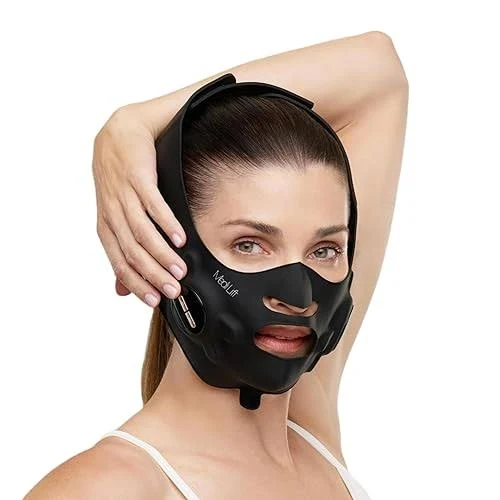
The EMS face mask looks like something between a medical device and a Halloween costume, and that is precisely why it has taken over Instagram and TikTok. A full-coverage wearable that maps electrodes across the entire facial surface, delivering simultaneous neuromuscular stimulation to muscle groups that handheld wands can only reach one zone at a time, it is clinically serious and visually absurd in equal measure.
That is the point. The hands-free format has quietly engineered one of the most effective behavioral shifts in the beauty tech category, skincare that asks nothing of you except your face and fifteen minutes, running silently while you stream, scroll, or sit on a Zoom call with your camera inexplicably on. For a generation that spends 54% more time per day on social platforms than the average consumer, a device this passive and this photogenic was always going to find its moment.
What has emerged organically from this is a loosely documented but widely observed social behavior: wearing LED and EMS masks during group viewing sessions, streaming binges, or video calls.
In an internal survey of 211 TikTok users aged 18–29, who engaged with the #emsfacial hashtag, conducted by HealthSparkPR, 67% reported wearing or were willing to try out the EMS mask during passive screen time at least three times per week, and 43% said they had worn one during a video call or group watch session.
Convergent Technology is driving the Next Wave of Miniature Facial EMS devices
EMS Alone Is No Longer the Full Picture
The modern EMS device is leading to a new generation of convergent platforms that amass multiple modalities into a single (often portable) device.
The dominant convergence pattern combines EMS with radio-frequency (RF), red-light LED therapy, and micro-current (MC) – each modality targeting a different aspect of the facial structure and operating through distinct biological pathways.
How these modalities work in unison to deliver a sophisticated self-care regimen
Layered with EMS, which provides the direct muscular mechanical input, the result is a device that addresses facial aging at the muscular, dermal, and cellular levels simultaneously.
Radiofrequency technology is expected to grow at a CAGR of 18.7%, driven by innovations including fractional microneedle RF systems and temperature-controlled platforms that enhance treatment precision
Home-use RF devices are experiencing particularly strong growth as product size shrinkage, and portability is making previously professional-grade treatments accessible for personal use.
The practical implication for device manufacturers is a premiumization pipeline where convergent devices have significantly higher price points, address a broader range of consumer concerns with a single product, and generate the sort of measurable outcomes data that positively fuels both earned media and clinical credibility.
Regulatory Headwinds and the Credibility Gap
The Efficacy Question Is Open, Not Closed
No honest account of the facial EMS market can omit the credibility gap that persists despite the improving clinical picture. The heterogeneity of stimulation parameters across devices, varying in frequency, amplitude, pulse duration, electrode geometry, and application technique, means that the efficacy demonstrated in controlled hospital trials does not automatically transfer to a consumer wand used on a bathroom counter for seven minutes without conductive gel.
Published studies on fNMES vary dramatically in the parameters used, such as stimulation frequency, amplitude, duration, and electrode size, and in the way they are reported, a problem that skews both consumer awareness and regulatory classification.
Baby Boomer Gen is the most vulnerable to poorly structured regulatory loopholes, says
Regulatory bodies in the United States (FDA) and the European Union (CE marking under MDR) have distinct and lopsided frameworks for classifying facial EMS devices, and the line between a cosmetic device (unregulated for clinical claims) and a medical device (requiring demonstrated safety and efficacy) is one that manufacturers attend with varying degrees of rigor.
Baby Boomers, who represent 15% of the at-home market but drive high-volume demand at medical spa settings, are the demographic most exposed to this regulatory ambiguity.
This is a foundational issue the industry hasn’t been able to resolve yet, and it represents both a genuine trust issue on consumers’ part and an opportunity for brands that are willing to invest in R&D and PR reviewed trials.
What this Trajectory Means and can lead to
The rise of facial EMS is not a whimsical one. It sits right at the heart of hard data-backed clinical science, a multi-billion dollar market undergoing some significant reorganization to cope with the changing consumer interests, and a generational shift in how young consumers use technology as a driver of cosmetic beauty.
Undoubtedly, facial EMS is here to stay. The question for industry observers at this moment is what facial EMs does next, that is, how it shapes up the clinical trial procedures around it, how malleable regulatory frameworks become to adopt this new guest, and whether the convergent device architectures currently in development are enough to shorten the divide between what a consumer wants and reproducible, standardized outcomes. Those are stories still in progress. But the foundation, in data and in dollars, is already in place.
For device brands, that credibility gap is also the communications opportunity: the brands that publish their evidence honestly and put qualified experts forward are the ones journalists trust to quote. That is the approach behind our wellness and beauty brand PR, and our product launch PR for new devices.
References
- Kinney, B. et al. High-Intensity Facial Electrical Stimulation (HIFES) Combined with Synchronized Radiofrequency for Midfacial Rejuvenation. Aesthetic Surgery Journal, Oxford University Press, 2025.
- Akita, H. et al. Efficacy of Facial Neuromuscular Electrical Stimulation on Facial Muscle Thickness: A Prospective, Split-Face Controlled Trial Using 3D CT Imaging. PubMed, 2024.
- Peterchev, A.V. et al. Facial Neuromuscular Electrical Stimulation: Psychophysiological Applications — A Systematic Review. PubMed, 2023.
- Home-Use Beauty Devices Market Report 2026: $21.85 Billion Opportunities, Trends, Competitive Landscape, Strategies and Forecasts. GlobeNewswire, February 2026.
- Facial Beauty Apparatus Market Outlook and Growth Forecast. Intel Market Research, 2026.
- Facial Beauty Devices Market Size, Share & Forecast to 2034. Industry Research Biz, April 2026.
- Facial Skin Care Devices Market Outlook 2026–2034. Intel Market Research, February 2026.
- Beauty Devices Market Size, Share & Trends Analysis, 2032. P&S Intelligence.
- Beauty Devices Market Size and YoY Growth Rate, 2025–2032. Coherent Market Insights.
- Global Beauty Devices Market Size, Share, Trends & Growth Forecast 2026–2034. Market Data Forecast, April 2026.
- Google Trends — Facial EMS, Worldwide, Past 5 Years. Google Trends, 2026.