Healthcare PR
The Importance of Public Relations in Healthcare (with Statistics)

Healthcare today isn’t just about treatment — it’s about trust. Before visiting a clinic or booking an appointment, most people first go online. They read reviews, compare ratings, and look for names they’ve seen in the news.
In fact, 84% of consumers say they would reconsider a referral to a provider rated below four stars (Press Ganey, 2025).
Seven in ten patients use online reviews as the first step in finding a new doctor, and 90% use them to evaluate physicians (Software Advice). More recently, 59% of patients said they rely on online search and would delay booking if a provider lacked good reviews (Press Ganey, 2025).
These numbers show one thing clearly — trust and communication matter as much as medical skill. People want confidence before care. They want to feel informed, assured, and connected.
That’s where public relations steps in. PR builds the bridge between medical expertise and public understanding. It helps hospitals, clinics, and individual practitioners earn credibility, manage their image, and connect with people on a human level.
In this article, we’ll explore what PR in healthcare really means, the vital roles it plays, and why it’s now one of the most important ways to trust, growth, and patient satisfaction in the medical world.
If you’re a clinician, clinic or health brand looking for hands-on support, our healthcare PR agency page explains how we work.
What is PR in Healthcare?

Public Relations (PR) in healthcare is the art of managing communication between healthcare organizations and the public. It’s about how hospitals, clinics, doctors, and health brands share information, build trust, and shape their reputation.
In simple terms, healthcare PR helps people understand, believe, and connect with medical professionals and services. It involves everything from media coverage and press releases to patient education campaigns, social media updates, and crisis communication.
Marketing vs PR
- Unlike marketing, which focuses on promotion and sales, PR focuses on trust and transparency.
- It ensures that patients receive accurate information, that healthcare providers are seen as credible sources, even during challenges.
With healthcare information spreading faster than ever, effective PR has become critical. In a 2024 survey, 71% of consumers said clear, easy-to-understand communication is what builds their trust in healthcare organizations (Smart Communications).
Good PR not only meets that expectation — it strengthens the bond between care providers and the communities they serve.
Role of Public Relations in Healthcare

Public Relations plays a central role in how healthcare organizations connect with the public. It’s not just about publicity — it’s about communication that builds confidence, educates people, and protects reputation.
A strong PR strategy helps healthcare providers:
- Build and maintain trust: 85% of consumers say perceived safety factors into their healthcare decisions (Press Ganey, 2025). Consistent and transparent communication makes people feel safe and informed.
- Manage reputation: PR teams handle how hospitals appear in the media, respond to reviews, and address misinformation before it spreads.
- Educate the community: Through campaigns, press releases, and awareness programs, PR helps share valuable health information — from preventive care tips to vaccination drives.
- Handle crises: During pandemics or emergencies, clear PR communication prevents panic, spreads verified updates, and guides public behavior.
- Enhance internal communication: PR also supports employees by keeping staff informed and aligned with the organization’s mission and values.
Public relations acts as the voice of healthcare institutions — ensuring messages are accurate, empathetic, and trustworthy. When done right, it transforms healthcare organizations from service providers into reliable health partners.
Importance of Public Relations in Healthcare

Public Relations isn’t just helpful in healthcare — it’s essential. In an industry built on trust, communication can make or break how patients view a provider or hospital.
A single message can shape opinions. Nearly half of patients will walk away from a provider if a clinician’s online details are outdated or missing (Press Ganey, 2025). That’s exactly what strong PR delivers.
Here’s why public relations matters so much in healthcare:
- Builds Credibility: Patients often rely on what they read and hear. Positive media stories, expert interviews, and educational content all help a healthcare organization stand out as a trusted authority.
- Increases Patient Confidence: When people understand what a hospital or clinic stands for, they feel more comfortable choosing it. PR helps communicate that clarity.
- Drives Community Awareness: Public health campaigns — like vaccination drives or disease prevention messages — reach more people through strategic PR efforts.
- Protects Reputation in Crisis: Mistakes, misinformation, or health scares can quickly damage trust. Effective PR manages the message, controls panic, and restores confidence.
- Supports Growth and Partnerships: A strong public image attracts not only patients but also skilled professionals, investors, and collaborators.
In a world where healthcare is increasingly digital, a positive reputation is as valuable as medical expertise. Public relations ensures that every message, story, and patient interaction strengthens that reputation — building long-term trust and loyalty.
Why Do People Search for Reviews Before Choosing a Healthcare Provider?

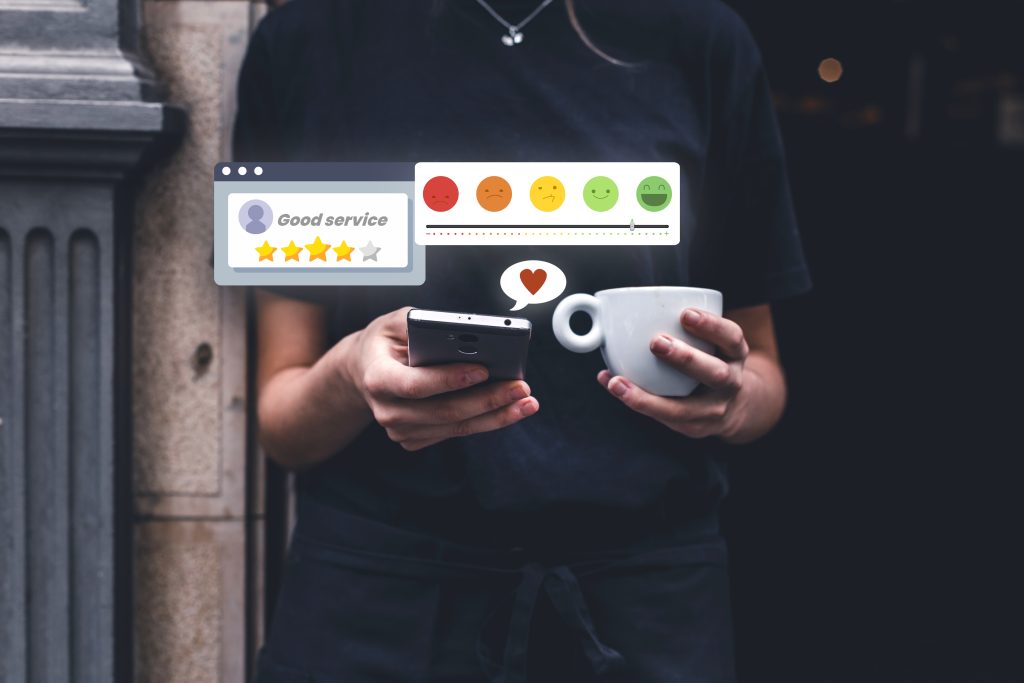
Before booking an appointment, most people do one thing first — they search online. In fact, seven in ten patients start their search for a new doctor by reading online reviews (Software Advice). For many, those reviews are more influential than any advertisement or brochure.
Healthcare by and for the People
- Healthcare decisions are deeply personal.
- People want to feel safe, respected, and cared for.
- Reviews give them real stories from real patients — experiences that help them imagine what their own visit might be like.
A few key reasons drive this behavior:
- Trust through social proof: When others share positive experiences, it builds confidence in a provider’s ability and care quality.
- Transparency: Reviews reveal how doctors communicate, how clinics handle issues, and how staff treat patients.
- Reputation signals: A high rating or consistent positive feedback tells people that the provider is professional and dependable.
- Risk reduction: Choosing a healthcare provider feels safer when others have already tested and approved the service.
83% of patients require at least a four-star rating before they will consider a provider (RepuGen, 2024).
How Media Mentions Build Trust in Healthcare Experts?
Seeing a healthcare provider’s name in a newspaper, magazine, or online publication can immediately boost credibility. Coverage in a respected outlet is third-party validation that paid advertising can’t buy, which is why it carries weight with patients and referrers alike.
Media mentions act as a form of social proof. When experts are quoted in health articles, interviewed on TV, or recognized for their work, it signals authority and reliability. Patients interpret this as a sign that the provider is knowledgeable, experienced, and respected by peers.
Key ways media exposure builds trust:
- Validation of expertise: Being featured publicly shows that the provider’s opinions and skills are valued.
- Increases visibility: Patients who might not know a doctor personally get introduced to them through trusted channels.
- Reinforces reputation: Regular media presence keeps providers top-of-mind and signals ongoing credibility.
- Supports patient decisions: People often perceive providers seen in media as safer, more skilled, and more professional than those who remain unknown.
In short, media mentions are more than publicity — they are a powerful trust-building tool. Combined with strong PR strategies, they help healthcare experts establish authority, attract patients, and stand out in a competitive field.
Key Statistics on Healthcare PR Providers

Public Relations has become a major factor in shaping healthcare organizations’ reputation and patient trust. Here are some key statistics that highlight its impact:
- Reviews come first: Seven in ten patients use online reviews as the first step in finding a new doctor (Software Advice).
- Ratings set the bar: 83% of patients require at least a four-star rating to consider a provider (RepuGen, 2024), and 84% would reconsider a referral to a provider rated below four stars (Press Ganey, 2025).
- Accurate information matters: Nine in ten patients call accurate online information about clinicians a top priority (Press Ganey, 2025).
- Doctors are the most trusted voice: 80% of people trust doctors on health, against 38% for journalists (Edelman Trust Barometer, 2026).
- Communication changes behaviour: A single text reminder at UCLA Health raised first-dose COVID-19 vaccinations by 26% (Dai et al., Nature, 2021).
- Misinformation is real: Misinformation appeared in up to 51% of vaccine-related social media posts in studies reviewed by the WHO (WHO/Europe, 2022).
These numbers show that healthcare PR is no longer optional. From reputation management to patient education, PR strategies directly influence patient behavior, trust, and organizational growth.
Strong communication translates into measurable benefits — more patients, higher satisfaction, and stronger credibility in the community.
Case Studies & Real-Life Examples

Public Relations in healthcare is more than theory — it works in practice. Real-life examples show how strategic PR can shape public perception, build trust, and even save lives.
During the pandemic, hospitals and health organizations used PR to share accurate updates, prevention tips, and vaccination information. Communication itself changed behaviour: in a randomised trial at UCLA Health, a single well-worded text reminder raised appointment bookings by 84% and first-dose vaccinations by 26% (Dai et al., Nature, 2021).
When a hospital faces negative online reviews and local media criticism, the recovery playbook is consistent: respond to patient feedback publicly and promptly, share genuine success stories, and put clinicians forward as experts in the media. Ratings recover when patients can see problems being fixed and hear credible voices, not when criticism is ignored.
Doctors recognized in reputable publications or interviewed on TV programs often attract more patients. Expert visibility compounds: each credible quote makes the next journalist more likely to call. One of our own clients, a dermatologist co-founder, became a repeatedly quoted expert across 15+ publications, including CNN, Yahoo and Healthline (see the haircare case study).
When a clinic faces a temporary service disruption, a proactive plan (a press statement, social media updates and direct messages to patients) keeps panic in check. Telling patients what happened, what is being done and when to expect the next update is what keeps confidence intact.
These examples show that healthcare PR is not just about promotion. It’s about educating, informing, and connecting with patients in meaningful ways. Strong PR creates measurable results — higher trust, better engagement, and a stronger reputation in the community.
Emerging Trends in Healthcare PR

Healthcare public relations is evolving rapidly. New technologies and changing patient behaviors are reshaping how providers communicate and build trust. Here are the key emerging trends:
- Hospitals and clinics increasingly use social media to reach patients directly. More than 94% of US hospitals already had a Facebook page a decade ago (Griffis et al., JMIR, 2014).
- Direct digital messages change behaviour too: in large randomised trials, simple text-message nudges increased vaccination uptake by roughly 5% to 26% (PNAS megastudy, 2021; Nature, 2021).
- Healthcare providers collaborate with trusted influencers and medical experts to share verified health information.
- Campaigns fronted by clinicians carry more weight: doctors are the most trusted source of health information, trusted by 80% of people across 16 countries (Edelman Trust Barometer, 2026).
- PR teams now rely on analytics to understand patient behavior, feedback, and sentiment.
- Using patient insights allows for targeted messaging, improving campaign effectiveness and engagement.
- The COVID-19 pandemic highlighted the importance of rapid, transparent communication.
- Transparency during a health crisis is what preserves trust: people forgive uncertainty far more readily than silence.
- Short videos, testimonials, and visual content are increasingly used to communicate complex health topics.
- In one randomised trial, patients given video instructions answered 94% of comprehension questions correctly, against 69% for written instructions (Translational Andrology and Urology, 2025).
- AI-driven tools help provide instant answers, share updates, and manage patient queries.
- In a JAMA Internal Medicine study, clinicians rated AI-drafted replies to patient questions higher in quality and empathy than physician replies in 78.6% of cases (Ayers et al., 2023). Patients weren’t surveyed, so human review still matters.
These trends show that healthcare PR is no longer just about press releases. It’s about engaging, educating, and connecting with patients in real time, using technology, data, and creative storytelling. Organizations that adopt these trends are better positioned to build trust, improve patient outcomes, and strengthen their reputation.
Challenges Faced by Healthcare PR Professionals

While healthcare public relations is central to in building trust and improving patient communication, it comes with unique challenges that require both strategy and sensitivity.
- Doctors (80%) and medical scientists (73%) are the most trusted sources of health information, well ahead of journalists (38%) (Edelman, 2026).
- One misleading statement or poorly managed campaign can harm a hospital’s reputation instantly.
- Building credibility requires transparency, consistent messaging, and evidence-based communication.
- A 2022 WHO-led review found misinformation in up to 51% of vaccine-related social media posts and up to 28.8% of COVID-19 posts in the studies it examined (WHO/Europe, 2022).
- PR teams constantly battle false or exaggerated claims spreading faster than official updates.
- Responding quickly with verified information has become a core skill for healthcare PR professionals.
- The pressure was personal too: during COVID-19, 57% of US health departments reported harassment of their officials (American Journal of Public Health, 2021).
- Managing patient panic while ensuring message accuracy is one of the toughest aspects of healthcare PR.
- Data protection laws such as HIPAA and GDPR shape what healthcare communicators can share about patients and outcomes, so every patient story needs a privacy check before it goes out.
- PR professionals must balance patient confidentiality with the need for transparency.
- Many hospitals, especially smaller clinics, operate with limited PR budgets.
- 42% of PR professionals say an overloaded or understaffed team limits their ability to win coverage (Muck Rack, State of PR 2025).
- As digital PR evolves, professionals must learn SEO, social media analytics, and online reputation management.
- Skills are stretched too: three in four in-house PR teams in the UK report skills shortages (CIPR State of the Profession, 2024).
Healthcare PR Salaries: What the Data Shows
Specific pay data for healthcare PR roles is rare, so the figures below cover PR roles generally, with healthcare settings shown where the data allows.
| Role | Typical pay | Source |
|---|---|---|
| PR specialist, US (all industries) | $74,750 median | US BLS, May 2025 |
| PR specialist, US healthcare & social assistance | $64,550 median | US BLS, May 2025 |
| PR manager, US | $146,910 median | US BLS, May 2025 |
| PR practitioner, UK (all roles) | £53,052 average | CIPR, 2024 |
| PR manager, UK | £50,419 average | CIPR, 2024 |
| Head of communications, UK | £58,547 average | CIPR, 2024 |
Public Relations in Hospitals
Hospitals face a bigger, more public version of healthcare PR than most providers. A hospital speaks to patients and families, its own staff, local media, regulators and the wider community, often all at once, and usually at the moments that matter most: a new service opening, a public health alert, or an incident under scrutiny.
Most hospitals run PR through an in-house communications team. Its work typically covers:
- Media relations: answering press enquiries, arranging interviews with clinicians, and pitching stories about new treatments, research and staff achievements.
- Crisis communication: clear, fast and accurate updates when something goes wrong, coordinated with clinical and legal teams.
- Community and public health campaigns: screening drives, vaccination programs and awareness days.
- Internal communication: keeping staff informed, so the message patients hear is consistent.
- Reputation and reviews: monitoring coverage and online feedback, and responding responsibly.
The importance of public relations in a hospital comes down to trust: patients choosing where to be treated, clinicians choosing where to work, and communities deciding whether to believe official health guidance. For individual specialists and departments the same principles apply on a smaller scale. Becoming the trusted voice journalists call is how expertise reaches the public, and it’s the work we do in healthcare and medical PR and healthcare media relations.
How to Build an Effective Healthcare PR Strategy

Creating a powerful PR strategy in healthcare isn’t just about promotion — it’s about educating, informing, and building lasting trust with patients and the community. Here’s how to do it effectively:
- Begin by identifying who you’re communicating with — patients, families, healthcare partners, or the media.
- Messages tailored to a specific audience consistently outperform generic ones, so segment your audiences before you write.
- Use surveys, social listening, and patient feedback to understand pain points and expectations.
- Define measurable objectives: improving public trust, increasing patient engagement, or promoting new health services.
- Example: at UCLA Health, a targeted text reminder raised appointment bookings by 84% and first-dose vaccinations by 26% in a randomised trial (Nature, 2021).
- Consistency is key. Patients value authenticity and accuracy.
- Around six in ten consumers say good communication matters for their loyalty and willingness to recommend a provider (Smart Communications, 2024).
- Social media, blogs, and online publications are now central to healthcare PR.
- Facebook is the near-universal hospital platform: more than 94% of US hospitals had a page by 2014 (JMIR). Choose other platforms by where your patients actually are.
- Create a mix of educational content, testimonials, and expert insights to reach different audience segments.
- Media mentions still have high credibility.
- Expert attribution builds credibility: a named clinician quoted in an independent outlet signals trust that self-published content can’t.
- Build relationships with journalists covering health topics and provide them with timely, factual stories.
- Track metrics like engagement rate, sentiment, website traffic, and appointment requests.
- Two-thirds of PR professionals say measurable results are the best way to prove PR’s value (Muck Rack, 2025), so agree your metrics before the campaign starts.
- Use tools like Google Analytics, social media insights, or healthcare-specific PR dashboards.
- In healthcare, a crisis can strike anytime — from data breaches to misinformation.
- Only 35% of organisations had a highly relevant crisis plan when COVID-19 hit (PwC Global Crisis Survey, 2021). Write yours before you need it.
- Always communicate early, honestly, and with verified facts.
Conclusion
Public relations in healthcare is no longer just about managing reputation — it’s about building trust through connection, clarity, and compassion. In an age where seven in ten patients start their search for a new doctor with online reviews, and doctors remain the most trusted voice in health, PR has become the invisible heartbeat of modern healthcare communication.
As digital platforms evolve and patient expectations rise, the most successful healthcare organizations will be those that speak with people, not at them. They’ll use storytelling to humanize data, social media to inspire confidence, and transparency to strengthen loyalty.
From vaccination drives to mental health awareness, from crisis management to influencer-led education — healthcare PR is shaping not just perceptions but public well-being itself. The future belongs to those who combine data, empathy, and innovation to make every message matter.
Sources
- Software Advice, How Patients Use Online Reviews, 2020. softwareadvice.com
- Press Ganey, Consumer Experience in Healthcare (via Business Wire), February 2025. businesswire.com
- Press Ganey, healthcare consumer experience report (via Business Wire), November 2025. businesswire.com
- RepuGen, Patient Review Survey 2024. repugen.com
- Edelman, 2026 Trust Barometer Special Report: Trust and Health. edelman.com
- Smart Communications, The State of Customer Conversations, 2024 (via Health Populi). healthpopuli.com
- Griffis et al., Use of Social Media Across US Hospitals, Journal of Medical Internet Research, 2014. pmc.ncbi.nlm.nih.gov
- Dai et al., Behavioural nudges increase COVID-19 vaccinations, Nature, 2021. doi.org
- Milkman et al., A megastudy of text-based nudges encouraging patients to get vaccinated, PNAS, 2021. hks.harvard.edu
- Video discharge instructions increase patient understanding: an RCT, Translational Andrology and Urology, 2025. pmc.ncbi.nlm.nih.gov
- Ayers et al., JAMA Internal Medicine, 2023 (via Healio). healio.com
- WHO/Europe, Infodemics and misinformation negatively affect people’s health behaviours, 2022. who.int
- Harassment of public health officials during the pandemic, American Journal of Public Health, 2021 (via CIDRAP). cidrap.umn.edu
- Muck Rack, The State of PR 2025. muckrack.com
- CIPR, State of the Profession 2024. cipr.co.uk
- PwC, Global Crisis Survey 2021. pwc.com
- US Bureau of Labor Statistics, Occupational Outlook Handbook: Public Relations Specialists; Public Relations and Fundraising Managers, May 2025 data. bls.gov